



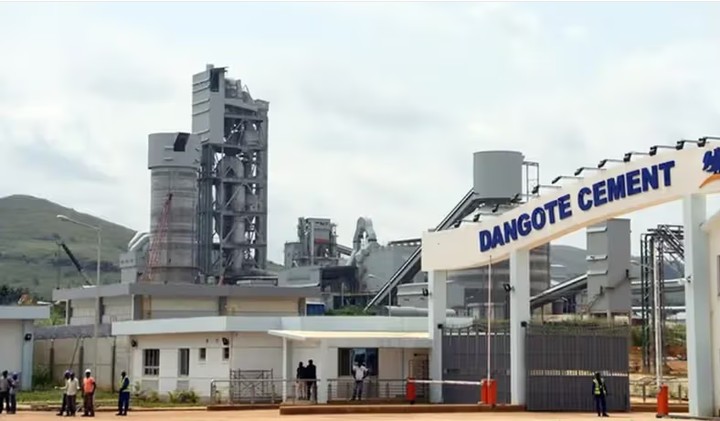
A new development in West Africa’s cement industry has drawn attention after the government of Senegal secured an ownership stake in one of the region’s major industrial operations.
Zilla Naija gathered that the Senegalese government has acquired a 10 percent equity stake in Dangote Cement Senegal, a subsidiary of Dangote Cement owned by Nigerian business magnate Aliko Dangote.
The acquisition was disclosed in the company’s 2025 annual report, which shows that the parent company’s ownership in the Senegal operation has been adjusted. Following the transaction, Dangote Cement’s direct stake in the subsidiary has decreased from 99.99 percent to 89.99 percent, officially making the Senegalese government a minority shareholder in the company.
Industry observers say the move reflects a broader economic trend seen across several African countries, where governments seek to obtain minority stakes in major industrial firms. The approach allows public institutions to gain strategic oversight and financial benefits while still leaving operational management largely in the hands of private companies.
Revenue Decline Raises Market Concerns
The new partnership comes at a time when the Senegal-based cement operation is experiencing financial pressure.

According to financial disclosures reviewed by Zilla Naija, revenue at the company dropped significantly between 2024 and 2025. The company recorded revenue of NGN192.2 billion (about $138.6 million) in 2024, but this figure declined to NGN151 billion in 2025.
This represents a 21.4 percent decline, which analysts attribute to a combination of weaker demand and operational challenges affecting the cement plant located in Dakar.
Sales volumes also reflected the slowdown in the construction sector. Cement sales reportedly fell by 19.8 percent, reaching approximately 1.2 million tonnes during the year under review.
Experts say this drop suggests that construction activity in the country may have slowed during the period, impacting demand for building materials.
Strengthening Dangote’s Presence in West Africa
Despite the recent market pressures, analysts believe the new arrangement could strengthen Dangote Cement’s long-term presence in the West African market.
By bringing the government in as a shareholder, the company may deepen its relationship with local institutions while continuing to maintain operational control of the plant.
The move aligns with Dangote Cement’s broader regional strategy, which involves building partnerships across different African countries while navigating shifting market conditions.
Since the company began operations in Senegal in 2015, the cement plant has become an important contributor to the country’s industrial sector.
The operation has created numerous direct and indirect jobs for Senegalese workers across several sectors, including manufacturing, logistics, transportation, and distribution.
Production Capacity and Regional Supply
Dangote Cement Senegal currently operates with an installed production capacity of about 1.5 million tonnes per year.
The facility primarily supplies cement for domestic construction projects while also exporting surplus production to neighboring West African markets.
The plant plays a key role in supporting various development projects across Senegal, including housing construction, infrastructure development, and commercial real estate expansion.
Government Expands Role in Strategic Industries
For the Senegalese government, the investment signals a broader effort to increase participation in strategic industries tied to national development.
Cement production remains a vital component of economic growth, particularly in developing economies where infrastructure expansion and urbanisation are rapidly increasing demand for construction materials.
By acquiring an equity stake in the company, the government could benefit from dividend earnings while also gaining a stronger voice in discussions relating to production levels, sector policy, and long-term industry development.
Analysts note that such partnerships between governments and private companies are becoming more common across Africa as countries look for ways to strengthen domestic industrial capacity.
Cement Industry Remains Key to Infrastructure Growth
Experts say cement demand across Senegal is still expected to be supported by public infrastructure projects, housing expansion, and urban development initiatives in the coming years.
Government participation in the sector may therefore help balance commercial objectives with national development priorities.
The latest development also highlights the strategic role that cement manufacturing continues to play in Africa’s broader industrial growth story.
As the new ownership structure takes effect, Senegal is expected to maintain a stronger role in shaping the future direction of one of its most important industrial sectors while supporting long-term infrastructure growth across the country.
Zilla Naija will continue to monitor developments in the regional cement industry and provide updates as more details emerge.