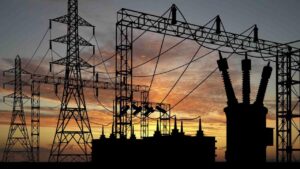


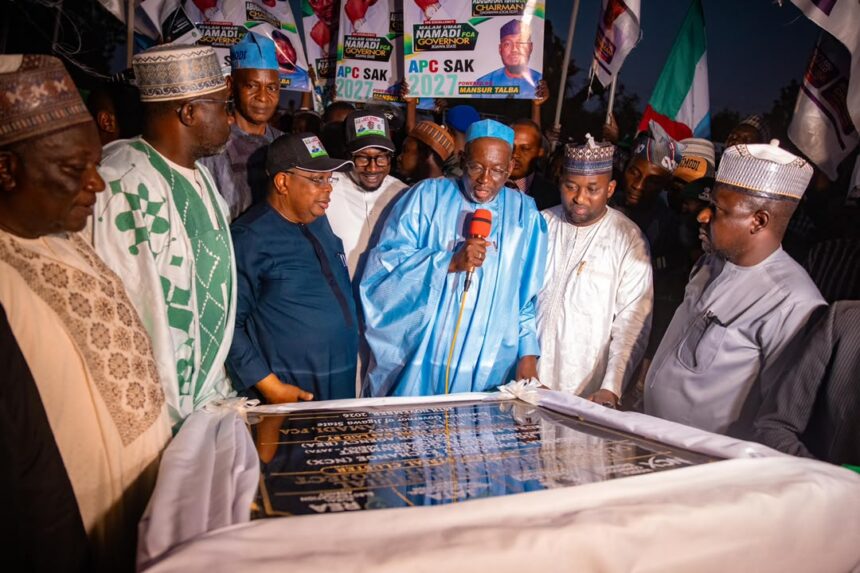
The Rural Electrification Agency, REA, has commenced the development of 8.5 megawatts, MW, of renewable energy infrastructure across four agricultural and commercial hubs in Jigawa State, pioneering an integrated electricity and commodity exchange model in Nigeria.
The groundbreaking ceremony, held in Jigawa State on Thursday, marked a strategic collaboration involving the Federal Ministry of Power, the Federal Ministry of Industry, Trade and Investment, the Jigawa State Government, the Nigeria Commodity Exchange, NCX, and private-sector partner Astound Power Limited.
Together, the five partners are aligning their complementary mandates to transform rural agrarian communities into commercially viable agro-industrial clusters. The Federal Ministry of Power, through REA, is responsible for decentralised renewable energy deployment; the Federal Ministry of Industry, Trade and Investment provides policy alignment for industrialisation and export promotion; the NCX establishes structured markets, warehousing, quality grading, transparent price discovery and warehouse receipt financing systems; the Jigawa State Government provides an enabling investment environment; while Astound Power Limited contributes private capital and commercial execution.
By introducing NCX-backed warehouse receipt systems alongside reliable electricity supply, the partnership aims to address persistent bottlenecks in Nigeria’s agricultural value chain, including post-harvest losses, inadequate storage, fragmented markets and limited access to credit. Stored produce can serve as collateral, enabling farmers and aggregators to access financing and reducing the pressure to sell immediately after harvest at depressed prices.
The Jigawa rollout serves as the pilot blueprint for a wider seven-state agro-industrial cluster programme spanning Jigawa, Taraba, Kaduna, Kebbi, Ekiti, Osun and Ebonyi states.
Meanwhile, the Minister of Power, Chief Joseph Tegbe, and the Jigawa State Governor, Umar Namadi, also commissioned 33 mini-grids and performed the groundbreaking for an additional 65 mini-grids. When completed, the projects will bring the total number of electricity connections under the Rural Electrification Agency’s programme in Jigawa to 143,001.
In his remarks, Jigawa State Governor, Malam Umar Namadi, reaffirmed his administration’s commitment to leveraging the state’s agricultural strengths and strategic markets to attract private investment.
“Through this strategic partnership with the Federal Government, the Nigeria Commodity Exchange and the private sector, we are laying the foundation for Jigawa to move beyond being predominantly a producer of agricultural commodities to becoming a competitive centre for agricultural processing, value addition, structured commodity trading and exports,” the Governor stated.

Speaking on the significance of the groundbreaking ceremony and the commodity exchange model, the Minister of Power, Chief Joseph Tegbe, stressed that power infrastructure must be deliberately embedded in productive economic sectors.
“Electricity must not be treated as an isolated infrastructure investment. It must be deliberately integrated into the productive sectors of our economy. What we are pioneering in Jigawa demonstrates the enormous possibilities that emerge when power, agriculture, industry, trade and private capital converge around a common development objective,” Tegbe said.
He added that the partnership underscored the government’s commitment to decentralised renewable energy as a pathway to industrial competitiveness and food security.
Commending the Jigawa State Governor, Tegbe said: “This investment also puts into practice a key objective of the Electricity Act, which President Bola Ahmed Tinubu, GCFR, signed into law in 2023, by demonstrating how states can use their new powers to shape their own electricity markets and improve supply.
“Jigawa moved early and established a Ministry of Power and Renewable Energy, legislated for its own electricity regulator and partnered with REA to plan electrification. The state has also increased its stake in KEDCO and signed an agreement for a solar panel assembly plant here in Jigawa. I commend His Excellency, the Governor, for turning that opportunity into practical action.”
Addressing stakeholders at the groundbreaking ceremony, the Managing Director and Chief Executive Officer of REA, Dr Abba Abubakar Aliyu, explained that the four project sites were selected for their commercial vitality and expansion potential.
“We are not simply bringing electricity to Jigawa. We are bringing electricity to what Jigawa does best: agriculture, commerce and enterprise,” Dr Aliyu noted.
He emphasised that the Agency measures success not merely by installed megawatts but also by the tonnes of produce preserved and processed, the jobs created and the incomes improved.
Each facility is tailored to local economic drivers. The 2MW interconnected mini-grid in Gujungu will power rice milling, warehousing, packaging and digital commodity trading at one of the state’s premier agricultural markets, while the 2MW plant in Malam Madori will support grain processing, commercial enterprises and value addition within the gum Arabic export chain.
In Ringim, the 3MW interconnected mini-grid, the largest of the four, will support irrigation, vegetable preservation, grain milling, groundnut oil extraction and cold-chain facilities. Meanwhile, the 1.5MW isolated mini-grid in Sara will drive livestock enterprises, refrigeration, food preservation and rural micro, small and medium-sized enterprises.
Dr Aliyu disclosed that the new projects expand REA’s existing footprint in Jigawa State, where the Agency already maintains a portfolio of 98 mini-grid interventions, comprising 33 active projects and 65.